Set Up a Webhook
To use Webhooks A Webhook is an HTTP endpoint that an external system exposes to receive data automatically. You can configure an HTTP Data Destination to send form submission data or Documents to a third-party system's Webhook URL, such as posting a notification to Slack when a user submits a form., create a FormSpace FormSpaces are where forms are stored and organized in the TrueContext Web Portal. A TrueContext Team may have multiple FormSpaces, depending on their needs. Admins can set FormSpace permissions to control which users have access to the forms in that FormSpace.-level Webhook A Webhook is an HTTP endpoint that an external system exposes to receive data automatically. You can configure an HTTP Data Destination to send form submission data or Documents to a third-party system's Webhook URL, such as posting a notification to Slack when a user submits a form. in the web portal, then add and configure a Webhook question in the Form Builder The Form Builder is the tool that form designers use to create forms. In the Form Builder, accessed from the TrueContext Web Portal, form designers can add and edit pages, sections, and questions, as well as attach data destinations and configure the form's settings.. Mobile users can then run Webhook actions and retrieve data from external systems while filling out a form.
Available on the Elite tier:
Contents
Response Usage
Webhooks can be configured in two ways based on how the response is used. A single webhook can serve both purposes, and both can be used in the same form.
| Purpose | Functionality | Typical use | Routing requires user confirmation | Trigger options |
|---|---|---|---|---|
| Info Webhook | Calls an external system and displays the response as read-only in the webhook question. The technician can see the result but cannot edit it. | AI-generated recommendations, risk scores, compliance flags, site conditions, and other reference data surfaced at the right moment in the form. | Not applicable | Automatic or manual |
| Routing Webhook | Calls an external system and populates other form fields with the response. The technician must tap a button to trigger the call, then confirm before the values are applied. | Populating fields with fetched data: work order details, asset specs, scored or computed values from an external system or AI service, where the technician confirms the result before it takes effect. | Optional; designer can require users to accept or decline before routing. | Manual only |
Webhook creation overview
The following table summarizes the configuration steps and where each is performed.
Create a Webhook — Portal
Webhooks are FormSpace-level objects that define how TrueContext calls an external API — including the endpoint, parameters, and headers. Each Webhook is built on a team-level HTTP connection and can be reused across one or more forms.
Note:Updating Webhook parameters affects all forms that use the Webhook. If you add or rename parameters, users can't submit those forms until you map the new parameters to questions. Removing parameters doesn't block submissions, but review and update Webhook mappings in affected forms. To avoid disrupting production forms, create a new Webhook and update your forms to use it instead of editing the existing Webhook.
Prerequisites
- If creating a new Connection, you need credentials to authenticate to the external system. Check the third-party API documentation for the supported authentication method, and confirm that the credentials have permission to perform all required actions.
- Admin user or user with Can Create FormSpace permissions.
- An Elite subscription.
Constraints
- Webhooks send a single synchronous request and receive a single response in the same session.
- Webhook responses can’t contain binary or executable content.
- Each Webhook requires at least one parameter and supports up to 10.
Steps to Set up a Webhook in the Portal
-
Go to Forms & Integrations > Webhooks > CREATE WEBHOOK > HTTP Webhook.
-
On the Name tab, enter a name for the Webhook and, optionally, a description.
-
On the Connection tab, in Connection Configuration, do one of the following:
Option Description Select an existing Connection Choose an HTTP Connection from the dropdown. The base connection URL is shown below the dropdown. Create a new Connection Configure the Connection details, including the name, base connection URL, and authentication scheme. Info:For full details on creating a new HTTP Connection, see the HTTP Connection topic.
-
In Request Configuration, configure:
Setting Description HTTP Method 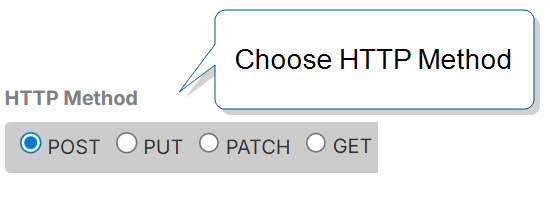
URL Path 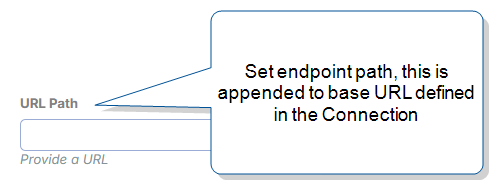
Query Parameters
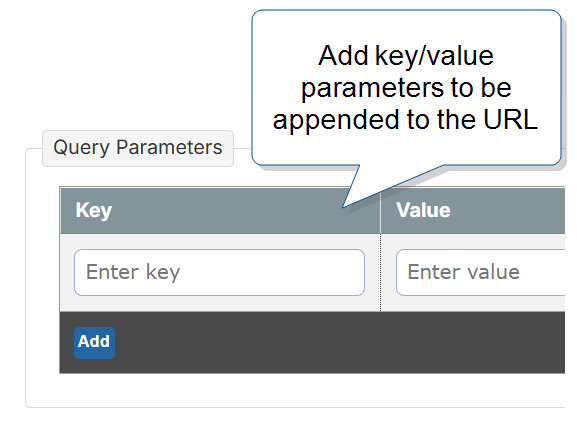
HTTP Headers
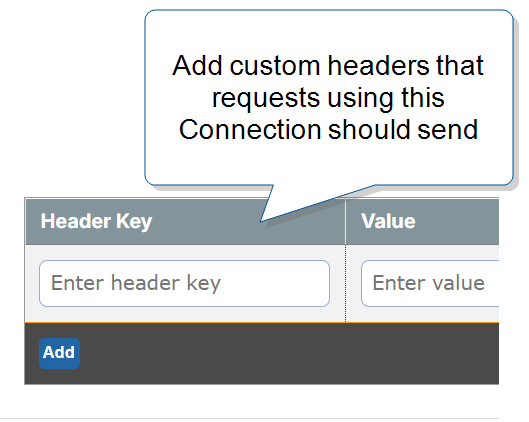
Note:This section isn't intended for secret values. Store API keys, tokens, and sensitive information in the Connection instead, where they are encrypted.
-
For POST, PUT, or PATCH requests, in Request Body, configure:
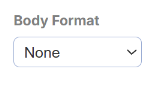
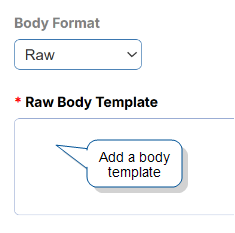
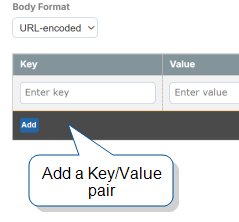
Setting Description Body Format Define the request body:
-
None
-
Raw
-
URL-encoded
-
None
-
In Test Request, configure:
Action Description Enter test values 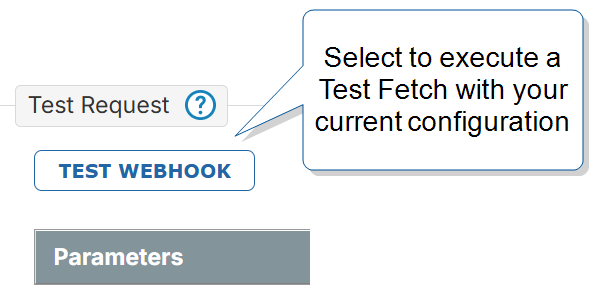
Note:Webhook requests must include at least one parameter of any type.
Test in progress Wait while TrueContext runs the test.
-
Review the test result:
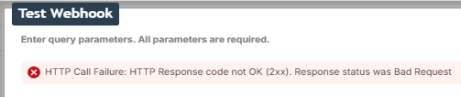
Result Description Test result A failed test shows the failure reason:
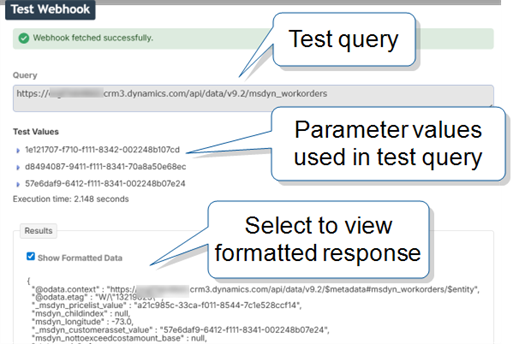
A successful test shows the query and the results:
-
Select Create to save the Webhook.
Note:Once you create a Webhook and add it to a form, you can no longer delete it. You can only delete a Webhook if it’s not in use by any form versions, whether Active, Archived, or Draft.
Add a Webhook to a form — Form Builder
Prerequisites
- A FormSpace-level Webhook
Constraints
-
Each form that uses a Webhook must include at least one parameter question A parameter question is any question defined in your form that's also used to provide values to an On-Demand Data Source or a Webhook query., up to a maximum of 10; parameters must come from questions, not static values.
- Webhook questions can’t be used directly as parameters for other Webhooks.
- Webhook questions aren't allowed in repeatable or template-based sections.
- Webhook questions can't be used in Conditional Logic rules, or other form logic such as concatenation.
- Each form can reference up to five unique Webhooks.
- Webhook questions aren't available in Customer Feedback Forms Customer Feedback Forms are browser-based, can be used on any platform, and are available to customers and third parties by means of a URL link. They don’t require an app download or a user login..
Steps to set up a Webhook question
-
Configure:
Setting Description Question Text Label that mobile users see for the Webhook question. Unique Identifier for Question Unique name that identifies the Webhook question in the form. Data and Control Type Uses a Free Text-style data type and stores the Webhook response as a text value. Restrictions Controls whether the question is:
- Required — the form can't be submitted until the Webhook action has run successfully. Use with caution: if connectivity is poor, this can block form completion entirely.
- Read only — the Webhook question is visible but the user can't interact with it. The action can still run automatically if configured, but the user can't manually trigger it.
- Hidden on device — the Webhook question isn't visible to the mobile user. The action can still run automatically in the background, but the user has no way to trigger it manually or see the response.
- Hidden on reports — the Webhook response is excluded from submission reports. The action runs and the response is recorded, but it doesn't appear in the output.
-
Setting Description Select Webhook 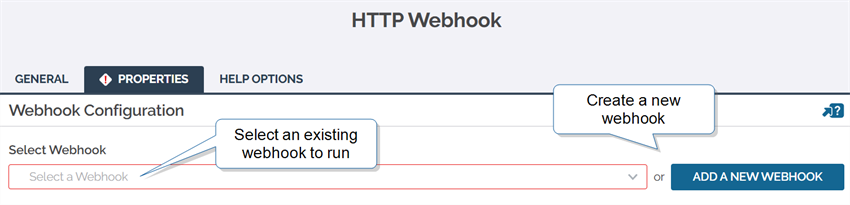
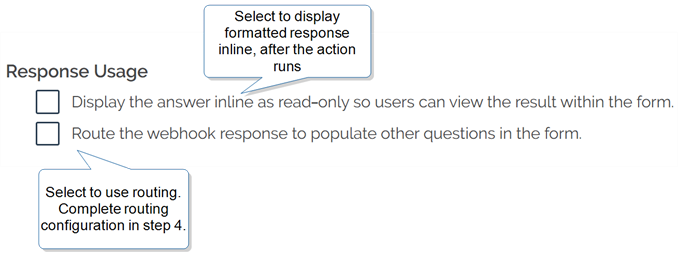
Response Usage
Display the answer inline as read-only so users can view the result within the formRoute the Webhook response to populate other questions in the form
Webhook Trigger 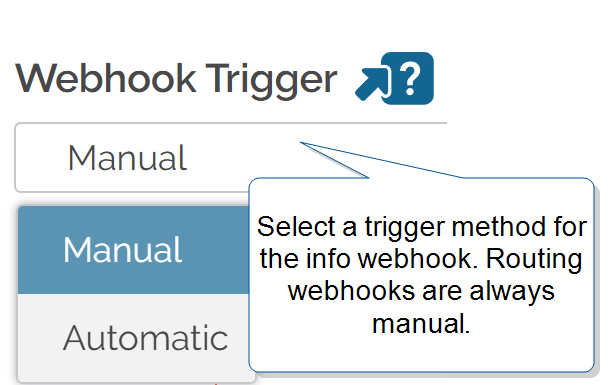
Parameter 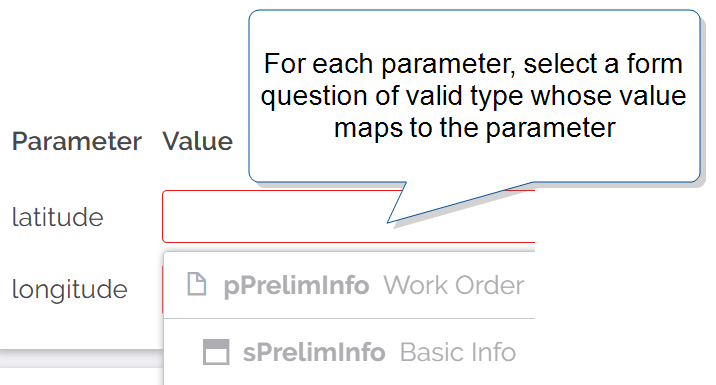
-
Setting Description Response Type 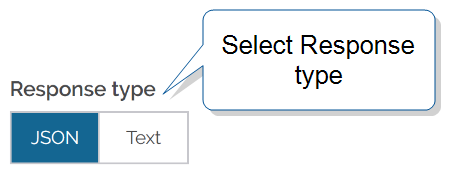
Answer Content 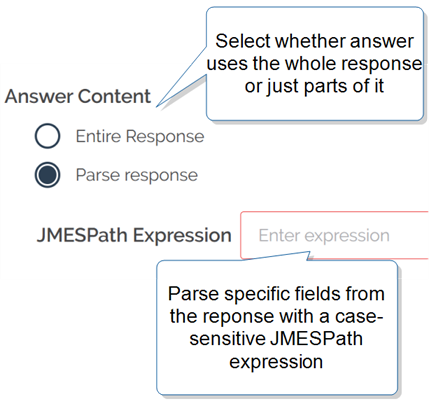
Info:JMESPath
JMESPath is a query language for JSON that's used to extract and filter data from JSON content. is a case-sensitive query language for extracting values from JSON Webhook responses. For a complete reference, see the JMESPath documentation.Does the Webhook response include Markdown formatting? 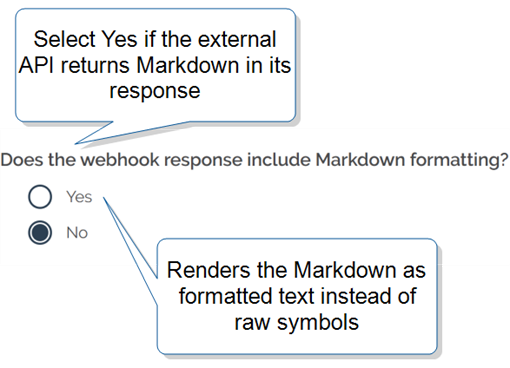
Note:If you aren't sure, select No. Enabling this when the response doesn't contain Markdown causes the raw syntax characters to appear in the form.
-
Additionally, for routing Webhooks, in Routing Configuration:
Setting Description Extract answers with 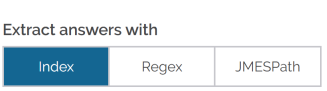
-
Index
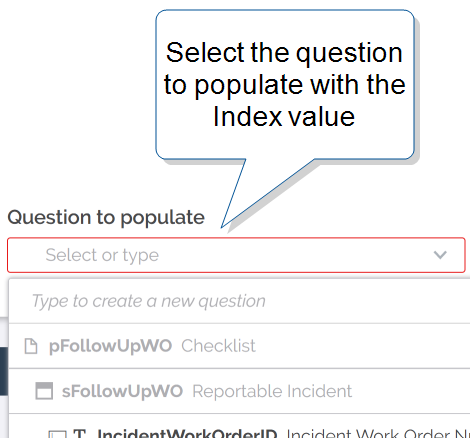
Note:Use a number or a range of numbers to extract data from an answer and populate other questions in the form. For example, if the answer is ABCDEFG, use a range of 1 to 3 to extract "ABC", or use the number 6 to extract "F".
-
Regex
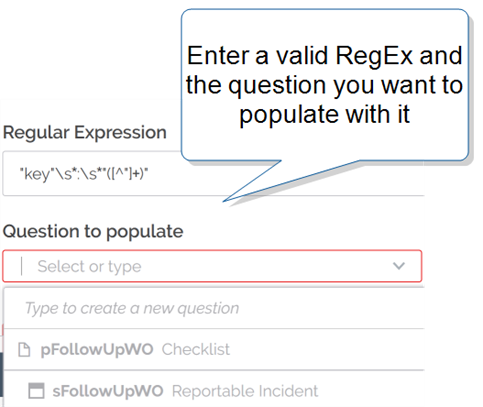
Note:Use regular expressions to extract capture groups and direct them to the chosen questions in a form. Test each expression and its results on each device to ensure consistent results.
-
JMESPath
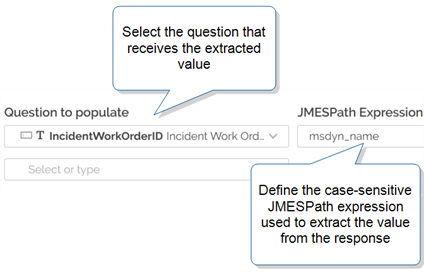
Note:Use JMESPath expressions to extract values from JSON responses and route them to form questions.
-
-
Select Save to add the Webhook question to the form.